
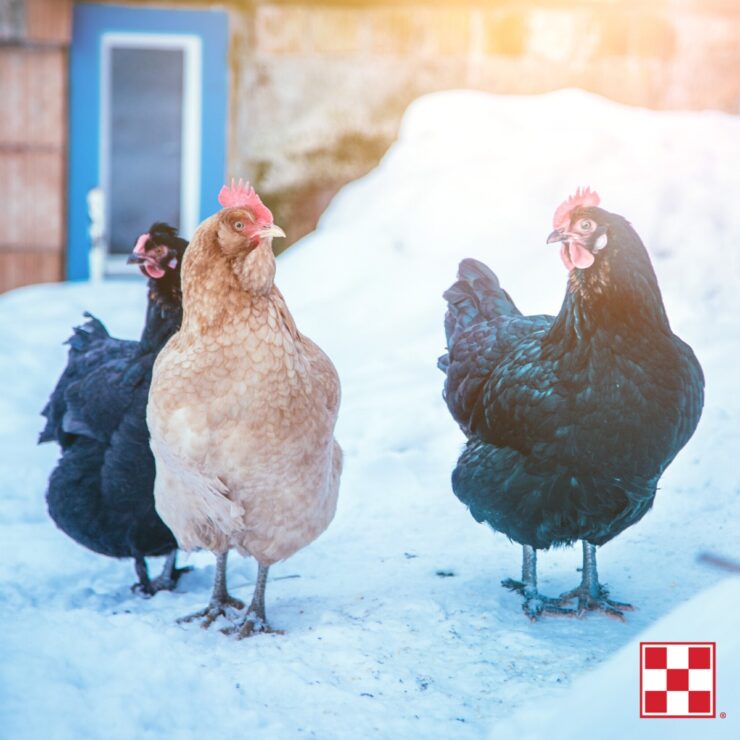
 It’s cold here in Georgia! Many backyard chicken keepers start to worry about their flock and wonder how to keep chickens warm in cold weather. While we bundle up in sweaters and coats, our feathered friends are surprisingly well-equipped for the cold. Chickens have their own down jackets and can huddle together for warmth. However, a few simple preparations can ensure they stay healthy, comfortable, and productive all winter long.
Learning how to keep chickens warm is less about heating the coop and more about creating a dry, draft-free environment. This guide offers practical winter chicken care tips to help you protect your flock from the cold, damp conditions of a Georgia winter. Make note, our stores have a huge supply of chicken feed and supplies, including heat lamps, bulbs and water heaters!
1. Prepare the Coop
Your flock’s primary defense against winter weather is a well-prepared coop. The goal is to block drafts and keep moisture out, without sealing it up so tightly that you restrict ventilation.
- Stop Drafts, Don’t Stop Airflow: A cold draft at roost level can quickly chill your birds. Inspect your coop for cracks or holes, especially at their roosting height, and seal them. However, ensure you maintain good ventilation near the coop’s ceiling. Vents will allow the ammonia and moisture your chickens produce to escape, which is critical for preventing frostbite and respiratory infections.
- Insulate Smartly: If your coop is not insulated, you can add foam board insulation to the walls. Be sure to cover the insulation with plywood or another material. Chickens will peck at exposed foam, which is harmful to their health.
2. Use the Deep Litter Method
One of the best ways to provide warmth is from the ground up. The deep litter method is a fantastic technique for winter chicken care.
- How it Works: Start with a 4- to 6-inch layer of clean pine shavings. Instead of completely mucking out the coop each week, simply turn the bedding with a pitchfork and add a fresh, thin layer on top. The composting action of the manure and shavings at the bottom of the pile generates natural heat, warming the coop from below. It also creates a thick, insulated barrier against the cold ground.
3. Boost Their Diet
Chickens use more energy to stay warm in the winter. You can help them generate body heat by adjusting their diet.
- Add Scratch Grains: Feed a handful of scratch grains, like cracked corn, to your flock in the late afternoon. The act of digesting these complex carbohydrates overnight creates metabolic heat, helping them stay warmer on the roost.
- Provide Quality Feed: Ensure their regular layer feed is always available. They will naturally eat more in the winter to meet their increased energy needs.
4. Manage Water and Frostbite
Dehydration is a real risk in winter. Chickens cannot drink frozen water, and frostbite can be a problem for breeds with large combs and wattles.
- Prevent Frozen Water: Invest in a heated waterer or a heated base. This is the easiest way to ensure your flock always has access to liquid water. If that is not an option, you will need to bring them fresh water at least twice a day.
- Protect Combs and Wattles: In a dry, well-ventilated coop, frostbite is less of a concern. However, for breeds with large combs, you can apply a thin layer of petroleum jelly to protect the exposed skin during a hard freeze.
Your Source for Winter Poultry Supplies
Keeping your chickens warm and healthy through a Georgia winter is straightforward with a little preparation. By focusing on a dry, draft-free coop and providing the right nutrition, you can ensure your flock remains happy and comfortable.
For all your winter chicken care needs, visit Cherokee Feed and Seed. We have everything from premium feeds and scratch grains to pine shavings and heated waterers. Our team is ready to help you find the right supplies to keep your flock thriving this winter. Stop by one of our Georgia locations today.
