 You’ve spent the season stocking your barn, carefully stacking the hay that will feed your animals through the North Georgia winter. It’s a significant investment of time and money. Yet, a silent threat lurks in our damp, humid climate: mold. Finding mold in your hay is more than just frustrating; it’s a financial loss and a serious health risk to your livestock.
Moisture is the primary enemy of stored hay. A few damp bales can quickly contaminate an entire stack, turning valuable forage into a dusty, toxic mess. Learning how to prevent hay mold is a critical skill for any livestock owner in our region. This guide provides practical winter hay storage tips to help you protect your investment and ensure your animals have safe, nutritious food all season long.
Why Moldy Hay is a Major Problem
Understanding the danger of moldy hay is the first step toward preventing it. This isn’t just about picky eaters turning their noses up at a few bad flakes. Feeding moldy hay can have severe consequences for your animals’ health.
The fine spores released from moldy hay are easily inhaled, leading to significant respiratory issues. In horses, this can cause Recurrent Airway Obstruction (RAO), also known as heaves, which is a chronic and often debilitating condition. For cattle and goats, inhaling mold spores can lead to respiratory infections and reduced lung capacity.
Ingesting moldy hay is just as dangerous. It can cause digestive upset, colic, and even poisoning, depending on the type of mycotoxins present. Furthermore, mold consumes the nutrients in the hay, so even if an animal eats it, they are getting a fraction of the nutritional value. In pregnant animals, certain molds can even lead to abortion. Protecting your hay is about protecting your animals.
Start with Dry, Quality Hay
Your efforts to prevent hay mold begin before the first bale is even stacked. You cannot fix hay that was baled with too much moisture. Hay that feels damp, heavy, or warm to the touch when you buy it is already at high risk for developing mold.
Always source your hay from a reputable supplier who understands the importance of proper curing. High-quality hay should be baled at a moisture level between 15-18%. Anything higher creates an ideal environment for mold to grow from the inside out, no matter how well you store it. When you purchase hay, inspect it carefully. It should have a fresh, sweet smell and a bright color. A musty or dusty odor is a clear red flag.
Our farm, J & J Hay Farms, takes pride in supplying large quantities of high-quality horse hay on a year-round basis. We can deliver truck loads to your facility, or hay can be purchased by the bale at our store in Ball Ground, Georgia. Call or contact us for the latest pricing information and delivery availability. We look forward to hearing from you!
Create a Moisture-Proof Foundation
One of the most common ways moisture infiltrates a hay stack is from the ground up. Concrete pads, dirt floors, and even compacted gravel can wick moisture into your bottom layer of bales, starting a chain reaction of spoilage.
Elevate Your Stack
Never store hay directly on the ground. The most effective way to prevent ground moisture is to create a barrier that allows for airflow. Wooden pallets are the gold standard for this purpose. They lift the entire stack off the floor, breaking the path of moisture and allowing air to circulate underneath. This simple step is one of the most powerful winter hay storage tips.
Choose a Well-Drained Location
If you have to store hay in a three-sided shed or under a lean-to, select the highest, best-drained ground available. Before you stack, observe how water flows in the area during a rainstorm. You want water to run away from your hay, not pool around or under it. Building your stack on a slight incline can make a significant difference.
Master Your Storage Environment
Once your hay is on a solid foundation, the next step is to protect it from the top and sides. Our North Georgia winters are known for cold rains, fog, and fluctuating humidity, all of which can threaten your stored forage.
Inside Storage is Best
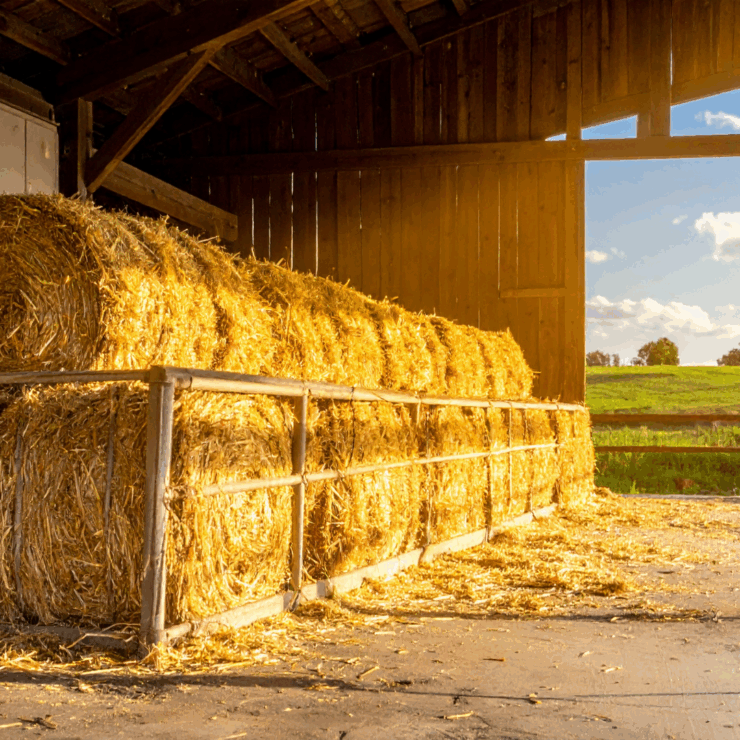
A dedicated, enclosed barn is the ideal storage solution. It offers the best protection from rain, snow, and sun. However, even in a barn, you need to think about airflow. Avoid packing hay so tightly that it touches the walls or the ceiling. Leave a gap of at least 18 inches around the entire stack to allow air to circulate. This helps dissipate any moisture that the hay naturally releases as it continues to cure.
Tarping the Right Way
For many, outdoor storage is the only option. If you must store hay outside, proper tarping is essential. Don’t just throw a cheap blue tarp over the top; this often does more harm than good by trapping condensation.
- Invest in a Quality Hay Tarp: Use a heavy-duty, UV-resistant tarp specifically designed for hay. These are more durable and breathable than standard plastic tarps.
- Create a Peak: Arrange the top bales to form a tent-like peak. This shape allows rainwater to run off easily instead of pooling on top and soaking through.
- Allow for Ventilation: Do not wrap the tarp all the way to the ground. This creates a “greenhouse” effect, trapping moisture released by the hay. Secure the tarp firmly but leave the bottom of the stack exposed to allow air to flow in and up through the hay.
Monitor Your Hay Throughout the Season
Storing hay is not a “set it and forget it” task. Regular checks are crucial to catch any potential problems before they ruin a large portion of your supply.
Make it a weekly habit to inspect your hay. Slide your hand between bales in different parts of the stack. Do they feel cool and dry? If you feel any warmth or dampness, you may have a moisture problem that needs to be addressed immediately. Use your nose, too. A sweet, grassy smell is good; a musty, moldy, or chemical odor is a sign of spoilage. If you find a few moldy bales, remove them from the stack immediately to prevent the mold from spreading.
Your Partner in Quality Forage and Supplies
A successful fight against hay mold starts with two things: high-quality, properly cured hay and the right storage supplies. Protecting your investment ensures your livestock have safe and nutritious forage to keep them warm and healthy all winter long.
At Cherokee Feed and Seed, we pride ourselves on offering premium hay that you can trust. We also stock all the essential supplies you need to protect it, from heavy-duty tarps to pallets and feeders. Our knowledgeable staff can provide expert advice on the best storage solutions for your specific needs. Visit us today to get everything you need to win the battle against hay mold this winter.
